
Low-rise on the Rise
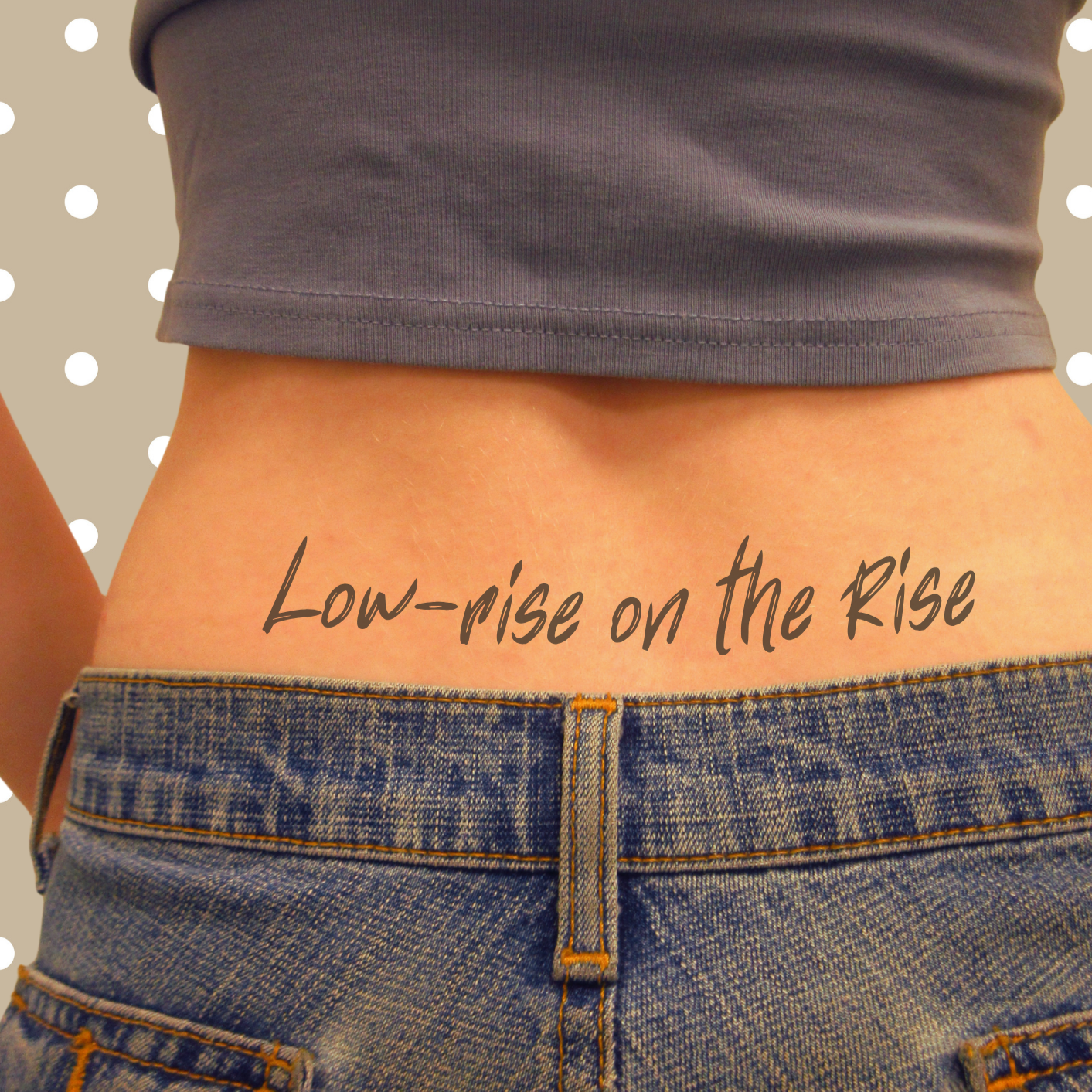
CATHERINE POWER // FLAT HAT MAGAZINE
Contrary to “Say No to Low Rise Jeans,” Britney did, in fact, pull off the denim silhouette.
A troubling, yet underlying truth about jeans is that they reflect society's standards for women's bodies in the United States. When low-rise denim became popular in the early 2000s, the fashion industry was fresh off the “heroin chic” era, championed by supermodel Kate Moss, romanticizing extremely slender body types. In the 2010s, millennials saw a shift toward appreciation for a fuller hourglass figure, endorsed by Kim Kardashian, which led to mid- to high-rise denim’s comeback. Body standards surrounding the ideal female silhouette had changed; therefore, the ideal denim cut had as well.
Yet, when examining the history of denim, it tells an entirely different story. In the early 20th century, jeans were almost exclusively used as workwear. In fact, during World War II, jeans were considered essential to military personnel and were not sold commercially. Denim material was hardly considered something that could even be marketed towards women until Marilyn Monroe wore it. Ever since, jean cuts have reflected the body standards set for women, highlighting the ever-present, ever-moving benchmark of female beauty. Yet, jeans were not sexualized when men wore them. It leaves you to wonder, why do women care so much about flattering their bodies with clothes?
In fall 2020, Flat Hat Magazine published an article by Alyssa Slovin ’22, “Say No to Low Rise Jeans.” In her article, Slovin posits that low-rise jeans are undeniably unflattering, much to the dismay of her biology teacher. Slovin says that “Some people think that they could come back in style this year, but I choose to think that society has reached a point where we know what suits our body types and what does not.” She argues that low-rise jeans make women look bad, in the simplest terms.
Ironically, Slovin admits that she does not think low-rise jeans will ever return to the limelight. The jean cut has persisted throughout the years, however the current resurgence might indicate a troubling truth about society's tolerance of women's bodies. But now, more than ever, it is possible to liberate women from the idea of "flattering" jeans and create a body-neutral environment that has not existed in the past.
Now, in the mid 2020s, America's youth has a strange identity paralysis. Despite online communities striving for body neutrality, it seems that every time a young woman opens her phone, she is inundated with one of the greatest tennis players of all time, Serena Williams, in a GLP-1 ad. The body neutrality movement's core tenet is to focus on the functionality of one's body, rather than the appearance. So rather than modeling one's ideal body after Kate Moss or Kim Kardashian, followers tend to focus on what their body can do: run a mile, lift a certain weight, or hike a challenging trail. The majority of people are considered plus-size in America, so now, more than ever, women need a new wave of body neutrality.
With the new push of oral GLP-1s, the pressure to change our bodies is greater than ever. While GLP-1s can greatly improve the lives of diabetics, ads targeting young women promote them as a get-skinny-fast drug; a few even, including Willow GLP-1, state that one should get a diagnosis for wanting to lose 10 pounds before an event. Is it not practically the same as when women would try crash diets in Vogue? In the early 2000s, when weight loss was worshiped, low-rise pants showed off one's flat stomach. It’s time to embrace the fact that no one type of pants flatters every body type. By extending the principles of body neutrality to clothing, women can break the undeniable link between clothing and body trends.
The solution is not that everyone should go to Gap and pick up low-rise jeans and a T-shirt that says "F— the Patriarchy." I reserve Slovin's right not to wear low-rise jeans, as I reserve my right to never pick up another pair of ultra-high-rise jeggings. But the claim that leads Slovin's article is one I take great issue with: "Even Britney couldn't pull them off." She then claims that Spears' denim causes her issues with sitting or bending over. Spears makes no comment. In fact, I have only found her saying positive things about her past fashion choices. So, it leaves me to believe that Slovin's leading line is simply her opinion about how Spears's jeans make her look. It is a tired and regressive claim that women should not wear items that do not flatter them. What even is considered flattering? As already established, the idyllic body is an entirely shifty concept in the American mind.
While some people appreciate the lower-back support of a pair of high-rise pants, others may dislike the tight coverage of their stomach. While high-rise pants may be better suited to everyday outfits for some, others may prefer the baggier silhouette of low-rise jeans. I know that for myself, a pair of high-rise skinny jeans on Thanksgiving is equivalent to the innermost ring of Dante's Inferno. Instead of viewing clothing as something to make a woman desirable, perhaps we can view them as functional, something that can communicate one's personality, or something that keeps you warm in winter.
The simple truth is that low-rise jeans coming back may, in fact, be an indicator that we are falling back into a fatphobic society and that people's tolerance for normal, healthy weight gain is draining. But do not blame the low-rise jeans. Anyone can wear them and look good, as long as they like them. Simply, by sorting women’s clothing into categories of flattering and unflattering, a person becomes a lawyer, judge, and jury for not just clothing, but also body types. Low-rise jeans are a reflection of people's attitudes and desire to police how women present themselves. If women were never told that their bodies were not enough, they simply would put on their jeans and go about their lives. Slovin's article is interesting because it focuses on what is considered a flattering silhouette for women. But here is the thing: no one’s body exists for another’s viewing pleasure.